
Electric Vehicles Continue to Grow in Popularity but Education Still Needed Says AAA
May 9th, 2013 by admin
Even as technology advances, motorists identify range anxiety and lack of charging locations as top reasons to not drive electric
ORLANDO, Fla., (May 9, 2013) – The number of electric vehicle charging station locations has increased 959 percent since the debut of the Nissan Leaf in 2010. Despite that, eight out of ten U.S. adults are unsure about or unlikely to buy an electric vehicle (EV) and 30 percent of them say it is due to mileage limitations and availability of charging stations locations, according to a survey by AAA.
“There have been major advancements in electric vehicle technology and the supporting infrastructure,” said John Nielsen, AAA Managing Director of Automotive Engineering and Repair, “However, it will take time and education for the general motoring public to understand just how far these vehicles have come, and recognize the many resources available to those who drive them.”
Modern EVs typically have a range of 60-100 miles, more than enough for the average driver’s daily commute which the U.S. Department of Transportation says is around 16 miles one way. As to recharging, the U.S. Department of Energy reports there are now more than 5,800 charging stations available for public use. The agency has aggressively promoted expansion of the electric vehicle charging infrastructure using funds from the American Recovery and Reinvestment Act.
Additional findings from the AAA survey, fielded in July 2012, show that 26 percent of U.S. adults who are unsure about or unlikely to buy an electric vehicle (EV) cite the higher cost in general of an electric vehicle (i.e. buying, maintaining) as a reason they would be unlikely/undecided to make such a purchase. “Battery improvements, increased competition, and economies of scale are all likely to drive down costs associated with buying an EV,” Nielsen continued. “With no need to change oil or filters and less brake system wear and tear, maintaining an EV is actually more affordable than a conventional vehicle.”
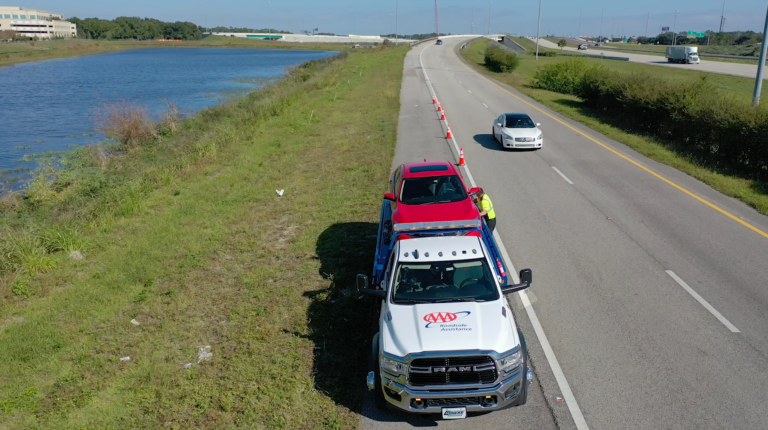
As joint efforts by government, private groups, and the automotive industry bring the charging picture into focus, AAA’s commitment to meeting member’s needs continues through electric vehicle roadside assistance. In 2011, AAA facilitated an extensive electric vehicle charging research and development program to help test EV charging as a roadside solution. AAA’s specially equipped road service trucks – capable of providing EV charging in approximately 15 minutes for about 10 miles of driving – are currently being tested in select markets across the country. The trucks can also provide traditional roadside services to members with any type of vehicle.
Working with the Electric Drive Transportation Association, AAA recently added EV content to their public information website, AAA Exchange. The new content provides basic information about electric vehicles that will help motorists determine whether an electric vehicle might be right for them. The materials also examine the various types of electric vehicles available, and help consumers understand the important differences that come with owning and operating an electric car.
Electric vehicle drivers looking for a public charging station in their area can consult the online AAA TripTik Travel Planner or the AAA Mobile application for smartphones. About 400 EV charging stations are located at AAA/CAA Approved hotels, restaurants and attractions. A green “plug” icon accompanies listings for these establishments in club-customizable AAA.com Travel Guides and 2013 Tour Book guides, which also denote stations available at AAA club offices.
As North America’s largest motoring and leisure travel organization, AAA provides more than 53 million members with travel, insurance, financial and automotive-related services. Since its founding in 1902, the not-for-profit, fully tax-paying AAA has been a leader and advocate for the safety and security of all travelers. AAA clubs can be visited on the Internet at AAA.com.
Cost of Owning and Operating Vehicle in U.S. Increases Nearly Two Percent According to AAA’s 2013 ‘Your Driving Costs’ Study
April 16th, 2013 by admin
Increase in maintenance, insurance and fuel drive up average cost for sedans to $9,122 yearly, 60.8 cents per mile
ORLANDO, Fla., (April 16, 2013) – AAA released the results of its annual ‘Your Driving Costs’ study today, revealing a 1.96 percent increase in the cost to own and operate a sedan in the U.S. The average cost rose 1.17 cents to 60.8 cents per mile, or $9,122 per year, based upon 15,000 miles of annual driving.
“Many factors go into the cost calculation of owning and operating a vehicle,” said John Nielsen, AAA Director of Automotive Engineering and Repair. “This year, changes in maintenance, fuel and insurance costs resulted in the increase to just over 60 cents a mile.”
The findings of the 2013 ‘Your Driving Costs’ study include:
| Based on Driving 15,000 miles annually |
Small Sedan |
Medium Sedan |
Large Sedan |
Sedan Average |
SUV 4WD |
Minivan |
| Cost Per Mile |
46.4 cents |
61.0 cents |
75.0 cents |
60.8 cents |
77.3 cents |
65.3 cents |
| Cost Per Year |
$6,967 |
$9,151 |
$11,248 |
$9,122 |
$11,599 |
$9,795 |
Additional Resources
- INFOGRAPHIC: 2013 Your Driving Costs
- BROCHURE: 2013 Your Driving Costs
In-depth findings of this year’s study, including a breakdown of specific costs by category of vehicle and various annual mileages, are contained in the ‘Your Driving Costs’ brochure which is available at select local AAA branch offices or may be downloaded in the additional resources bar.
Nielsen continued, “Before you make any vehicle purchase, it is important to determine ownership and operational costs and compare them to your current and future financial situation.” To assist consumers in determining their individual driving costs, the AAA ‘Your Driving Costs’ brochure contains a worksheet that can be filled out and personalized for a specific area, driver and vehicle.
Maintenance Costs Up 11.26 Percent
The costs associated with maintaining a vehicle had the single largest percentage increase from 2012 to 2013, growing by 11.26 percent to 4.97 cents per mile on average for sedan owners. AAA’s estimates are based upon the cost to maintain a vehicle and perform needed repairs for five years and 75,000 miles including labor expenses, replacement part prices and the purchase of an extended warranty policy. Driving the increase in maintenance costs is significant increases in labor and part costs for some models and a major increase in the price of extended warranty policies due to high loss ratios by underwriters.
Fuel Costs Up 1.93 Percent
Gasoline prices were relatively stable compared to the prior year, leading to a minimal fuel cost increase of 1.93 percent to 14.45 cents per mile on average for sedan owners. The average cost of regular grade fuel (used by most of the study vehicles) actually rose 3.84 percent, from $3.357 to $3.486 per gallon. However, several vehicles in the ‘Your Driving Costs’ study had small improvements in their fuel economy ratings which partially offset the fuel cost increase. Fuel costs in the 2013 study were calculated using the national average price for regular, unleaded gasoline during the fourth quarter of 2012.
Tire Costs Remain Unchanged
The cost of tires did not change from 2012 to 2013, remaining at one cent per mile on average for sedan owners. The stable price is attributed to a leveling off of past increased costs for raw materials, energy and transportation from factories to distributors across the country.
Insurance Costs Up 2.76 Percent
Average insurance costs for sedans rose 2.76 percent (or $28) to $1029 annually. Insurance rates vary widely by driver and driving record, issuing company and geographical region. AAA insurance cost estimates are based on a low-risk driver with a clean driving record. Quotes from five AAA clubs and insurance companies representing seven states showed across-the-board modest increases for all sedan sizes, with large cars having less of an increase than small- and medium-size sedans.
Depreciation Costs Rise .78 Percent
After seeing a drop in 2012, depreciation costs were up slightly in 2013, increasing .78 percent to $3,571 a year. This change may be a consequence of recovering new vehicle sales, resulting in more used cars available in the marketplace and thus the softening of the resale value of clean older models.
63rd Year of ‘Your Driving Costs’ Study
AAA has published ‘Your Driving Costs’ since 1950. That year, driving a car 10,000 miles per year cost 9 cents per mile, and gasoline sold for 27 cents per gallon.
The ‘Your Driving Costs’ study employs a proprietary AAA methodology to analyze the cost to own and operate a vehicle in the United States. Variable operating costs considered in the study include fuel, maintenance and repair, and tires. Fixed ownership costs factored into the results include insurance, license and registration fees, taxes, depreciation and finance charges. Ownership costs are calculated based on the purchase of a new vehicle that is driven over five years and 75,000 miles. Your actual operating costs may vary. See AAA’s 2013 ‘Your Driving Costs’ brochure for a list of vehicles and additional information on the underlying criteria used in the study.
As North America’s largest motoring and leisure travel organization, AAA provides more than 53 million members with travel, insurance, financial and automotive-related services. Since its founding in 1902, the not-for-profit, fully tax-paying AAA has been a leader and advocate for the safety and security of all travelers. AAA clubs can be visited on the Internet at AAA.com.
Ford and AAA Kick Off State Qualifying Events for National Student Auto Skills Competition
April 2nd, 2013 by admin
High school students across America compete for the opportunity to represent their state in the 64th Annual Ford/AAA Student Auto Skills Challenge
ORLANDO, Fla. (April 2, 2013) – The nation’s best young automotive minds from coast-to-coast are gearing up for the 2013 Ford/AAA Student Auto Skills Challenge State Hands-On competitions, which kick off Tuesday, April 16 with an event in Jackson, Miss.
Competitions continue across the country through May 14, with the top team from each state advancing to the national finals at Ford World Headquarters in Dearborn, Michigan June 9 – 11. At the national finals, champions from all 50 states will compete against one another for the right to call themselves the top young auto technicians in America and take home millions of dollars in scholarships.
Below are the dates and locations of all 50 2013 FORD AAA State Hands-On Competitions:
Jackson, Miss. – Tuesday, April 16
Birmingham, Ala. – Tuesday, April 17
Lexington, Ky. – Wednesday, April 17
Alexandria, La. – Thursday, April 18
Sioux Falls, S.D. – Thursday, April 18
Sanford, Fla. – Friday, April 19
Pearl City, Hawaii – Saturday, April 20
Warren, Mich. – Wednesday, April 24
Warminster, Pa. – Wednesday, April 24
Milford, Neb. – Thursday, April 25
Okmulgee, Okla. – Thursday, April 25
Anchorage, Alaska – Friday, April 26
Little Rock, Ark. – Friday, April 26
Atlanta, Ga. – Friday, April 26
Indianapolis, Ind. – Friday, April 26
La Porte, Texas – Friday, April, 26
Baltimore, Md. – Saturday, April 27
Brooklyn Park, Minn. – Wednesday, May 1
Atco, N.J. – Wednesday, May 1
Bridgeport, W.Va. – Wednesday, May 1
Helena, Mont. – Thursday, May 2
Nashville, Tenn. – Thursday, May 2
Sandy, Utah – Thursday, May 2
Warwick, R.I. – Thursday, May 2
Cheyenne, Wyo. – Thursday, May 2
Glendale, Ariz. – Friday, May 3
Danville, Calif. – Friday, May 3
Pomona, Calif. – Friday, May 3
Nampa, Idaho – Friday, May 3
Charlotte, N.C./S.C. – Saturday, May 4
Albuquerque, N.M. – Saturday, May 4
Virginia Beach, Va. – Saturday, May 4
Renton, Wash. – Tuesday, May 7
Ankeny, Iowa – Tuesday, May 7
Dover, Del. – Wednesday, May 8
Norwood, Mass. – Wednesday, May 8
Mequon, Wis. – Wednesday, May 8
North Haven, Conn. – Thursday, May 9
Sparks, Nev. – Thursday, May 9
Fargo, N.D. – Thursday, May 9
Kansas City, Mo./Kan. – Thursday, May 9
Toledo, Ohio – Friday, May 10
Champaign, Ill. – Friday, May 10
Gresham, Ore. – Friday, May 10
Denver, Colo. – Saturday, May 11
Epping, N.H./Maine/Vt. – Saturday, May 11
Morrisville, N.Y. – Tuesday, May 14
At the State Hands-On Competition, teams will race against the clock to correctly diagnose and repair a deliberately “bugged” 2013 Ford Focus SE. A combination of the online written exam and hands-on competition scores determine each state’s championship team that will compete in the national finals. For additional details on 2013 State Hands-On Competition locations and dates, visit Autoskills.AAA.com.
The Ford/AAA Student Auto Skills Competition is open to 11th and 12th grade students in secondary schools and colleges across the country that offer courses in automotive technology. Schools may enter one two-student team per instructor. Teams competing in the State Hands-On Competitions represent the 10 teams that scored highest on a statewide online written exam, administered at the beginning of the competition in January.
The Ford/AAA Student Auto Skills competition enables many of its participants to embark on promising careers in the automotive repair industry to help fuel the rising demand for well-trained technicians that can repair both computer and mechanical components in today’s advanced vehicles. Both the national and the state-wide competitions are organized with the support of AAA and Ford personnel, local automotive instructors and the AAA Approved Auto Repair program, a free public service AAA performs to identify quality repair facilities throughout the country.
About Ford/AAA Student Auto Skills
The Ford/AAA Student Auto Skills is a nationwide automotive technology competition that offers millions in scholarships and prizes to high school juniors and seniors interested in pursuing careers as automotive service technicians. More than 13,000 students from across the U.S. compete for the chance to represent their school and state in the National Finals. The competition tests students’ automotive knowledge, workmanship and problem-solving abilities. For additional information on the competition, visit http://autoskills.aaa.com/.
AAA Auto Buying Experts Select Top Vehicles for Commuters
March 26th, 2013 by admin
From a full electric vehicle to a spacious minivan AAA top picks driven by fuel efficiency and comfort
ORLANDO, Fla., (March 26, 2013) – Most Americans (86 percent) rely on their vehicle to get them to and from work every day. With an average commute of 25 minutes each way and gas prices hovering about $3.50 per gallon since February, selecting the right vehicle can make a commute more enjoyable and lower expenses. For motorists in the market for a new car AAA Auto Buying experts have selected vehicles that go the distance with comfort and performance.
“Many Americans are spending several hours every week in their vehicle to get to and from work,” says John Nielsen, director, AAA Automotive Engineering & Repair. “Having a vehicle that is reliable, fuel-efficient and comfortable can really make a difference in your everyday routine.”
AAA’s top vehicle picks are selected by AAA Auto Buying experts who test drive and evaluate hundreds of vehicles each year. Fuel efficiency, comfort and overall performance helped create this top list of vehicles for commuters.
Additional Resources
Compact Vehicles
Chevrolet Volt: This four-passenger, plug-in electric vehicle, sidesteps range anxiety with a gasoline engine on board to run a generator. The newest versions of the Volt allow a driver to force operation of the gasoline engine, ideal for a commute that starts on a highway, where gasoline power is more efficient, and ends in a city, where battery power is more cost effective. The car is exceptionally quiet, handles well and boasts great acceleration but rear seat room is tight if you plan to carpool. TrueCar reports that the Average Paid price of the 2013 Chevrolet Volt five-door hatchback is $38,871, 2.8 percent less than the MSRP*.
Toyota Prius or Prius V: These gasoline-electric hybrids set the standard for fuel efficiency in a gasoline-powered vehicle. The Prius seats five in reasonable comfort and is exceptionally efficient for urban commutes where regenerative braking and the ability to turn the gasoline engine off while the car is stopped enhances fuel efficiency. TrueCar reports that the Average Paid price of the 2013 Toyota Prius door hatchback is $24,066, 3.7 percent less than the MSRP, and the Prius V five door wagon is $26,350, four percent less than MSRP*.
Volkswagen Jetta SportWagen TDI: The SportWagen is a wagon style model that uses a diesel engine to deliver smooth acceleration with strong fuel economy. Handling is also precise and predictable. With the option of manual or automatic transmission, these cars are fun to drive, making the longer commutes seem less daunting. TrueCar reports that the Average Paid price of the 2013 Volkswagen Jetta SportWagen four-door manual hatchback TDI is $23,894, 9.2 percent less than the MSRP*.
Sedans
Audi A4: Beautifully finished and very comfortable in front, the A4 can make light work of any commute. Front-wheel drive is standard, but the option for Audi’s Quattro all-wheel drive system is available. The ride is firm but compliant and the handling is tops. The body structure feels exceptionally solid, even when facing rough urban pavement. Driving pleasure earns a very high grade, although the rear seat room earns a much lower score. TrueCar reports that the Average Paid price of the 2013 Audi A4 four-door Sedan CVT FrontTrak 2.0T is $31,697, 5.1 percent less than the MSRP*.
Buick LaCrosse: A steady ride, comfortable seating, responsive handling and an excellent V-6-based drivetrain make this car an ideal choice for commuting in a carpool. Performance is excellent. For buyers seeking the room and comfort of the LaCrosse with more fuel efficiency, a four-cylinder eAssist drivetrain is offered. Consider it a mild hybrid. TrueCar reports that the Average Paid price of the 2013 Buick LaCrosse four-door sedan base is $30,727, 5.6 percent less than the MSRP*.
Ford Fusion: Ford’s entry in the affordably-priced family sedan arena has been completely redesigned for 2013. The new model features a sleek exterior, an upgraded interior and new drivetrains. The Fusion is now offered with three engines, a base 2.5-liter four-cylinder engine and two optional turbocharged four cylinder engines, either 1.6- or 2.0-liters. The 2.0-liter, four-cylinder engine produces 240 horsepower, matching the output of many V-6s. This Fusion could easily have passed for a luxury car not too many years ago. Front-wheel drive is standard; all-wheel drive is an option. TrueCar reports that the Average Paid price of the 2013 Ford Fusion four door S is $20,038, 10.9 percent less than the MSRP*.
Hyundai Genesis: This V-6-powered sedan is refined, powerful and roomy. The V-6 engine turns in an exemplary performance and the new 8-speed automatic transmission raises the performance level to the point that the optional V-8 is unnecessary. While handling is predictable, the ride does fall a little short of full luxury sedan status. TrueCar reports that the Average Paid price of the 2013 Hyundai Genesis four door sedan V6 3.8 liter is $33,358, 4.9 percent less than the MSRP*.
Nissan Altima: The redesigned 2013 Altima continues to be a top choice for commuting. It is comfortable for all passengers, performs well and offers several unique safety features, including clever use of the backup camera to provide lane departure and blind spot warnings in some models. TrueCar reports that the Average Paid price of the 2013 Nissan Altima four door 2.5 liter is $21,706, 3.7 percent less than the MSRP*.
Crossovers
Ford Flex: This boxy crossover is hard to beat when looking for room in a vehicle. Buyers will find ample space for passengers or purchases. The ride is quiet and well controlled. The engines are V-6s, with the EcoBoost motor turning in a particularly good performance. Though costly, this EcoBoost engine not only outperforms the base V-6, in AAA testing it also delivered slightly better fuel economy. TrueCar reports that the Average Paid price of the 2013 Ford Flex SE is $26,803, 15.7 percent less than the MSRP*.
Toyota Highlander: In the crossover category, this vehicle features a comfortable ride and roomy interior. More impressive are its highway cruising manners and despite its size, ease of maneuvering in traffic. And while this vehicle’s size takes a minor toll in handling through sharp bends in the road, add a reputation for dependability and long life and you have a top choice for commuters needing size and passenger capacity. TrueCar reports that the Average Paid price of the 2013 Toyota Highlander four-door front wheel drive four cylinder is $27,978, 6.3 percent less than the MSRP*.
Minivan
Honda Odyssey: This roomy minivan is offered in a wide range of models, though even basic versions are well equipped and comfortable. Its size suggests that it is best suited to a less crowded commute venue, but even in an urban setting, the Odyssey is easy to drive. Front and second row seating comfort is quite good. The third row folds easily to from a flat load floor with ample space for a wide range of items. TrueCar reports that the Average Paid price of the 2013 Honda Odyssey LX is $27,801, 5.8 percent less than the MSRP*.
AAA provides free vehicle reviews, localized pricing information and more online at AAA.com/AutoMaker. Additional information on AAA Auto Buying is available at AAA.com/AutoBuying. The AAA Auto Buying Tools App is available here to access information on the go.
TrueCar, Inc. is the AAA preferred supplier for new and used car pricing information for the motor club. TrueCar is an online automotive information and communications platform focused on creating a better car buying experience for dealers and consumers. Consumers want a hassle-free car buying experience and dealers want high-quality sales velocity. TrueCar helps achieve these goals by providing unbiased market information on new and used car transactions and by supplying an online communications platform through which dealers and consumers can communicate with each other. TrueCar’s market-based information provides both consumers and dealers with an accurate and comprehensive understanding of what others actually paid recently for similar vehicles, both locally and nationally. If you are in the market for a new vehicle, you can configure a virtual vehicle with the specifications you want, see the Estimated or Target Price for that vehicle in your area, and then connect directly with local TrueCar Certified Dealers at AAA.com/AutoMaker. Once you submit a request, TrueCar Certified Dealer representatives will get in touch with you to discuss vehicles in their inventory.
*The Average Paid price is a proprietary mathematical calculation based on actual recent anonymized transaction information in your regional area, and includes destination and delivery charges after incentives that are subject to change, but does not include tax, title, licensing, documentation or processing fees, other state and governmental charges and/or fees, or any other charges or fees allowed by law. Your actual savings may vary based on multiple factors including the vehicle you select, region, dealer, and applicable manufacturer incentives. The Manufacturer’s Suggested Retail Price (³MSRP²) is determined by the manufacturer, and may not reflect the price at which vehicles are generally sold in the dealer¹s trade area as not all vehicles are sold at MSRP. Each dealer sets its own pricing. Your actual purchase price is negotiated between you and the dealer.
Image Gallery
- 2013 Nissan Altima
- Volkswagen Jetta SportWagen
- Hyundai Genesis
- Volkswagen Jetta Sportwagen
- Ford Fusion Titanium
- 2013 Ford Flex
- Audi A4
- 2013 Chevrolet Volt
- 2013 Buick LaCrosse with eAssist technology
- 2013 Toyota Highlander
- 2012 Toyota Prius V
- 2012 Toyota Priius V
AAA Says Millions of Motorists Still Locked Out on Smart Car Keys
March 6th, 2013 by admin
Motorists’ smart key learning curve results in risky and costly lesson
ORLANDO, Fla., (March 06, 2013) – Even as the technology, security and convenience of automobile “smart keys” evolve, AAA finds motorists are not keeping pace and are frequently outsmarted by their “smart” keys. In 2012, AAA came to the rescue of over four million members who locked themselves out of their vehicles, a number that has dropped little in the past five years; even as use of smart keys has increased. First available in luxury brands like BMW, Mercedes and Lexus, almost all automakers now offer the smart key as standard or optional equipment within their fleet of vehicles. As a modern convenience, transponder fobs allow motorists to enter and start their vehicle key-free.
“Traditional car keys will likely become obsolete and be replaced by technologies offering even greater security and convenience,” said John Nielsen, AAA Director of Automotive Engineering and Repair. “Motorists will need to adapt with the technology to avoid the hassle and expense of smart key replacements.”
While new smart key features provide long list of conveniences, including remote start and stored driver profiles, motorists unfamiliar with operating keyless fobs can face risky situations and lockouts. Forgetting to turn off the car before exiting the vehicle, or not knowing how to quickly shut down the engine in an emergency, has proven to be a problem for some. And, for those systems with remote start capability, it is critical that motorists never start the vehicle in an enclosed space where engine exhaust gasses containing poisonous carbon monoxide can be trapped – with potentially fatal consequences.
Just as motorists adjust to smart key features, they may be surprised to learn that smartphones may soon be an option to replace their car key altogether. Electric vehicles from Chevrolet and Nissan today have special mobile apps that can be used to monitor and control many of their basic functions. And, Hyundai recently unveiled a more advanced concept that allows motorists to enter and start a vehicle using a specially-configured smartphone that can then interface with the vehicle to provide additional functions and services. Some of this technology could be seen in vehicles as soon as 2015.
The greater conveniences and features of modern car keys do not come cheap and require more maintenance. The purchase price of vehicles that offer modern key technology are higher, the fob battery must be changed periodically and it can cost hundreds of dollars to buy, cut and program a new or replacement key.
“The cost to replace a transponder key runs around $100, and replacement smart keys can cost several hundred dollars depending on the make and model,” continued Nielsen. “Many newer keys must be programmed by a dealer or locksmith with special electronic equipment and accesses to highly confidential codes that are required to service the vehicle security system.
AAA recommends motorists take special care of their transponder and smart keys. Here are some steps that can help prevent danger, loss or damage of vehicle keys, and limit the replacement cost in the event a key is misplaced:
- Familiarize yourself with the full capability of your smart key and know what to do in an emergency situation
- Become comfortable with the features of the smart key in a safe environment
- To avoid keyless-entry remote or smart key failure, replace the key/fob battery every 2 years or when recommended by the vehicle manufacturer or the in-car low battery warning system.
- Don’t expose your keyless-entry remote or smart key to harsh elements – especially water.
- Obtain a spare key and store it in a safe location for emergency use only.
Aiding 28 million in 2012, AAA Delivers Breakdown Basics
February 21st, 2013 by admin
AAA offers tips and advice to help motorists stay safe and get back on the go after a breakdown
ORLANDO, Fla., (February 21, 2013) – With more than 125 million vehicles on the roadway and Americans relying on their cars for nearly every part of their life, AAA recognizes one of the most stressful things a motorist can encounter is a sudden breakdown. In 2012, AAA received more than 28 million roadside assistance calls. While 58 percent of those breakdowns could be resolved at the roadside by AAA technicians, nearly 12 million vehicles needed to be towed to a local repair shop for further help.
“Being stranded with your vehicle can be a very stressful experience,” said John Nielsen, AAA’s Director of Automotive Engineering and Repair. “It is important to be prepared for a break-down. There are several things to remember that can help keep you safe and get you back on the road more quickly.”
Additional Resources
- VIDEO: What to Do if Your Car Breaks Down
- PDF BROCHURE: What to Do if Your Car Breaks Down
What to Do When Your Vehicle Breaks Down on a Roadway
Since surroundings, traffic patterns and vehicle hazards vary, it is important to continually monitor and evaluate your situation. AAA offers the following guidelines and general suggestions for motorists experiencing a breakdown.
If the car is clearly experiencing a problem but can still be driven a short distance, drive to a safe location such as a parking lot. If the vehicle stops running but still has coasting momentum, guide it to the far right shoulder as far off the road as possible while remaining on level ground. Turn on the emergency flashers to alert other motorists.
If the car cannot get completely off the roadway, switch on the safety/emergency flashers and consider leaving the vehicle and moving to a safer location. Occupants should not remain in a vehicle if there is a possibility it may be struck by other traffic. For the same reason, it is generally not a good idea to attempt to push a disabled car off the road.
Drivers and passengers should exit a broken down car on the side away from traffic if at all possible. Use extreme caution and watch for oncoming vehicles, especially at night or in bad weather when visibility is limited. While waiting for help, never stand directly behind or in front of the disabled vehicle.
In addition to turning on a vehicle’s emergency flashers, drivers can signal other motorists that they have a problem by raising the car hood, tying a brightly colored handkerchief or scarf to the antenna or door handle, or setting out flares, warning triangles or emergency beacons. These signals can help other drivers recognize there is a problem and hopefully prompt them to slow down, move over to allow more room and proceed with caution as they pass.
Communicating Your Situation
Once the driver and passengers are in a safe location, request assistance from a road service provider such as AAA. Make note of surroundings, landmarks, buildings or road signs to help relay your location. Android and iPhone users can also download the AAA Mobile app which provides easy access to roadside assistance, vehicle battery quotes, Approved Auto Repair (AAR) locations, maps, directions, member-exclusive discounts and travel planning.
Where Do I Send My Car?
Once assistance arrives, if the technician is unable to remedy the problem at the roadside, the car will have to be towed somewhere for repair. Unless the driver is a savvy automotive do-it-yourselfer who wants the car towed home, the vehicle will most likely be towed directly to a repair facility.
When traveling away from home, or if the driver does not have a regular repair facility, AAA can provide the names and locations of nearby AAA Approved Auto Repair facilities. These quality shops have met stringent professional standards for training, equipment, cleanliness and customer service. AAA Approved Auto Repair is a free public service that can help any motorist identify trustworthy, quality auto repair facilities. Motorists can search for nearby facilities online at AAA.com/Repair. Approved Auto Repair facilities also can be quickly found with the AAA Mobile app or, on other web-enabled mobile phones, using AAA’s Mobile Web site at AAA.mobi.
To help drivers prepare for these unfortunate situations, AAA offers an in-depth guide called “What to Do When Your Vehicle Breaks Down: The AAA Guide to Personal Safety.” The guide can be downloaded for free here.
As North America’s largest motoring and leisure travel organization, AAA provides more than 53 million members with travel, insurance, financial and automotive-related services. Since its founding in 1902, the not-for-profit, fully tax-paying AAA has been a leader and advocate for the safety and security of all travelers. AAA clubs can be visited on the Internet at AAA.com.
Advanced Maintenance Technology Simplifies Proper Car Care says AAA
January 25th, 2013 by admin
ORLANDO, Fla., (January 25, 2013) – A survey by AAA has found that newer cars with built-in maintenance reminder systems are allowing owners to spend less time worrying about when to service their vehicles and more time enjoying vehicle ownership. According to the survey, 63 percent of motorists drive vehicles with a built-in maintenance reminder system that alerts them when it’s time to have service work performed. More than half (51 percent) of those drivers rely solely on the reminder system and have maintenance done only when the system says it’s due. AAA recommends that motorists always follow automakers’ maintenance recommendations as found in vehicle owners’ manuals, including the use of in-vehicle maintenance reminder systems (where equipped) as an accurate indicator of when a car needs service.
“It’s encouraging to see motorists accepting this technology. Maintenance reminder systems make vehicle ownership easier, and having required services performed at the appropriate intervals results in better overall performance and longer vehicle life, “ says John Nielsen, AAA’s director of Automotive Engineering and Repair. “Reminder systems can also save money by helping drivers avoid unnecessary service work.”
Reminder Systems and Vehicle Maintenance
Unlike traditional maintenance schedules based on time and/or mileage, maintenance reminder systems use various sensors and a computer algorithm to monitor vehicle operation and determine engine oil life based on real world use. The factors considered vary by reminder system, but commonly monitored values include hours of operation, engine rpm, cold starts, outside air temperature, vehicle speed and more. This analysis of real-time vehicle operating conditions makes choosing an oil change interval based on traditional “normal” or “severe service” driving conditions obsolete.
Frequency of Scheduled Maintenance
Motorists who follow their in-car reminder systems may also see a change in the frequency of recommended oil changes. While older vehicles sometimes required oil changes as often as every 3,000 miles, advancements in engine and lubricant technology have extended oil change intervals to 5,000 miles or more on most newer cars. In some cases, engines that use synthetic or semi-synthetic oils can have oil change intervals of more than 10,000 miles! AAA survey data show today’s motorists are beginning to accept longer oil change intervals, with 48 percent of drivers changing their oil every 3,000-6,000 miles.
Not All Oils Are the Same
While maintenance reminder systems typically call for extended oil change intervals, those recommendations are based on an assumption that the oil used in the engine meets the automaker’s specifications. AAA found that nearly 75 percent of motorists whose cars have built-in maintenance reminder systems understand that the accuracy of those systems depend on using engine oil that meets the vehicle manufacturer’s specifications.
Many newer cars today require the use of semi-synthetic oil (a blend of conventional and full-synthetic stocks) to maintain the warranty and ensure proper engine protection between oil changes. The use of full-synthetic oils is very common in European imports, high-performance models and engines equipped with turbochargers or superchargers. Using a lower quality oil than required will compromise engine protection, decrease the accuracy of the maintenance reminder system and potentially void the engine warranty. It is important that motorists and service providers be aware of the relevant standards for each vehicle and only use engine oils that meet them.
AAA Recommendations
AAA advises motorists to follow their vehicle manufacturer’s recommended maintenance schedule and, if their vehicle is equipped with a maintenance reminder system, to perform necessary maintenance when prompted by the vehicle. Ignoring maintenance reminders can increase vehicle wear and tear and potentially cause long-term damage. It is also important to know what type oil your vehicle requires and ensure that your service facility uses an appropriate product. The wrong oil could void a vehicle’s warranty, leaving the motorist to pay any needed repair bills.
As North America’s largest motoring and leisure travel organization, AAA provides more than 53 million members with travel, insurance, financial and automotive-related services. Since its founding in 1902, the not-for-profit, fully tax-paying AAA has been a leader and advocate for the safety and security of all travelers. AAA clubs can be visited on the Internet at AAA.com.
AAA Mobile Battery Program Tests Over 22 Million Batteries at the Roadside
December 23rd, 2012 by Kerrie

ORLANDO, Fla., (January 14, 2013) – Since the inception of the AAA Mobile Battery Program, AAA/CAA clubs have tested more than 22 million batteries at the roadside, resulting in over 7.5 million defective batteries being replaced on the scene. All AAA/CAA members are eligible for the service that includes a visit from a trained Battery Service Technician to their location to test their battery and if a problem is identified, members have the option to purchase a new AAA battery onsite. The average member cost of an installed AAA battery is $119 and includes a three-year free replacement warranty.
Additional Resources
What Should You Know About Your Vehicle Battery?
The average life of a battery is 3-5 years, but driving conditions, climate, and lack of care and maintenance can shorten a battery’s lifespan. Here are some warning signs that you are at risk for a battery-related breakdown:
- Your vehicle cranks slowly when trying to start
- You hear a grinding, clicking or buzzing when you turn the ignition on
- Your vehicle has stalled
- Your headlights dim when you are idling but brighten when you rev the engine
- Your battery is more than three years old
What to Do if You Have Suspect Your Battery is Failing
If you suspect an old battery is to blame for your vehicle trouble, call AAA. Battery testing is provided as part of the free Roadside Assistance service members are entitled to each year. As a benefit to members, AAA’s Mobile Battery Service can install a new AAA battery and recycle the old battery for you. AAA recycles every battery replaced, saving resources and keeping hazardous waste from landfills.
Android and iPhone users can download AAA Mobile, AAA’s mobile smartphone app that provides select AAA services for all motorists, such as obtaining a battery replacement quote, mapping and gas price comparison. AAA Membership is not required to download and use AAA apps, but is necessary to take advantage of unique member benefits such as roadside assistance and AAA Discounts. For more information on AAA Mobile, visit AAA.com/Mobile.
As North America’s largest motoring and leisure travel organization, AAA provides more than 53 million members with travel, insurance, financial and automotive-related services. Since its founding in 1902, the not-for-profit, fully tax-paying AAA has been a leader and advocate for the safety and security of all travelers. AAA clubs can be visited on the Internet at AAA.com.
With The Official Start of Winter Just Days Away, Are You Ready for Winter Driving?
December 18th, 2012 by admin
AAA cautions drivers to prepare for winter driving before the flakes start to fall
ORLANDO, Fla., (December 18, 2012) – Nearly one-quarter of weather related vehicle crashes occur on snowy, slushy or icy pavement, resulting in more than 1,300 deaths and 116,800 people injured annually, according to data from the Federal Highway Administration. With AccuWeather’s winter forecast calling for above-normal snowfall in some parts of the country and the first official day of winter December 21, AAA recommends motorists brush up on winter driving techniques before the weather outside turns frightful.
Additional Resources
- VIDEO: How to Drive in Snow
Prepare Your Vehicle for Use in Ice and Snow
Before winter conditions hit, it’s important to prepare your car for harsh winter weather. AAA’s Winter Car Care Checklist can help determine a vehicle’s winter maintenance needs. Many of the items on the list can be inspected by a car owner in less than an hour, but others should be performed by a certified technician. The AAA Winter Car Care Checklist can be found here.
Drive Distraction Free
It is also important when driving in winter conditions to drive distraction-free and in the right frame of mind. The AAA Foundation for Traffic Safety found that looking away from the road for just two seconds doubles your risk of being in a crash. AAA recommends if you are with a passenger, enlist the passenger’s help to carry out activities that would otherwise distract you from driving safely.
Do Not Use Cruise Control and Avoid Tailgating
Normal following distances of three to four seconds for dry pavement should be increased to eight to 10 seconds when driving on icy, slippery surfaces. This extra time will allow for extra braking distance should a sudden stop become necessary. If driving on a four-lane highway, stay in the clearest lane; avoid changing lanes and driving over built-up snow. Do not use cruise control when driving on any slippery (wet, ice, snow, sand) surface; not using cruise control will allow you to respond instantly when you lift your foot off the accelerator.
Know When to Brake and When to Steer
Some driving situations require abrupt action to avoid a crash or collision and in winter conditions the decision to steer or brake can have very different outcomes. When travelling over 25 MPH, AAA recommends steering over braking to avoid a collision in wintery conditions, as less distance is required to steer around an object than to brake to a stop. In slick conditions, sudden braking can lead to loss of vehicle control.
However, sometimes steering is not an option. Braking on slippery surfaces requires you to look further head and increased following and stopping distances. Plan stopping distances as early as possible and always look 20-30 seconds ahead of your vehicle to ensure you have time and space to stop safely. Shaded spots, bridges, overpasses and intersections are areas where ice is likely to form first and will be the most slippery. It is important to adjust your braking habits as road conditions change.
Stay in Control Through a Skid
Even careful drivers can experience skids. When a vehicle begins to skid, it’s important to not panic and follow these basic steps:
- Continue to look and steer in the direction the car needs to go.
- Avoid slamming on the brakes as this will further upset the vehicle’s balance and make it harder to control.
If you find your vehicle stuck in the snow, AAA members needing assistance can request roadside rescue at (800) AAA-HELP. Android and iPhone users can download AAA Mobile, AAA’s mobile smartphone app that provides AAA services for all motorists, such as mapping and gas price comparison, as well as member-exclusive benefits including roadside assistance and discounts. AAA Membership is not required to download and use AAA apps, but is necessary to take advantage of unique member benefits such as roadside assistance. For more information on AAA Mobile, visit AAA.com/Mobile. These tips and additional information on driving in winter conditions can be found in the AAA brochure How to Go on Ice and Snow online.
As North America’s largest motoring and leisure travel organization, AAA provides more than 53 million members with travel, insurance, financial and automotive-related services. Since its founding in 1902, the not-for-profit, fully tax-paying AAA has been a leader and advocate for the safety and security of all travelers. AAA clubs can be visited on the Internet at AAA.com.
Suspend Sale of E15 Gasoline
December 17th, 2012 by admin
By Robert L. Darbelnet, President and CEO of AAA
Published first in The Hill on Dec. 13, 2012
The Environmental Protection Agency (EPA) and gasoline retailers should suspend the sale of E15 gasoline until more is done to protect consumers from the potential for costly auto damage and voided warranties.
Additional Resources
Research to date raises serious concerns that E15, a fuel blend consisting of 15 percent ethanol and 85 percent gasoline, could cause accelerated engine wear and failure, fuel system damage and other problems such as false “check engine” lights.
The potential damage could result in costly repairs for unsuspecting consumers. This is especially tough for most motorists given that only about 40 percent of Americans have enough in savings to afford a major auto repair.
In June, the EPA approved the use of E15, and a handful of gas stations in Nebraska, Iowa and Kansas have begun to sell this fuel. There is a strong likelihood that retailers will market E15 in additional states soon unless regulators take immediate action to protect consumers.
Nearly all of the gasoline sold in the United States today is E10, which contains up to ten percent ethanol, primarily produced from corn. The ethanol industry has lobbied hard to increase the amount of ethanol allowed in gasoline as a way to increase sales and help meet the Renewable Fuels Standard.
AAA’s concern with E15 is not about ethanol. In fact, AAA believes that ethanol-blended fuels have the potential to save Americans money and reduce the nation’s dependency on fossil fuels. The problem is that available research, including the EPA’s exhaust emissions tests, is not sufficient evidence that E15 is safe to use in most vehicles.
The ethanol industry’s response to reports of damage caused by E15 is that it is the most tested fuel in the EPA’s history. The caveat to this assertion is that while the agency did test E15, their research focused primarily on exhaust emissions and associated components such as catalytic converters. While this research was consistent with the EPA’s mission, it never fully examined whether E15 might damage engines and fuel systems.
Some of those supporting E15 admit the fuel may cause damage. For example, the Renewable Fuels Association warned retailers that some underground storage tank systems, both new and used, exhibited reduced levels of safety and performance when exposed to E15. In addition, earlier this year the industry testified before Congress in support of legislation that proposed to give fuel producers blanket liability protections, while providing no protections to motorists. If the industry is not confident enough to take responsibility for the risks of E15, is it right that the risks be passed onto consumers?
Automakers advise they may void warranties for anyone using E15. Five manufacturers (BMW, Chrysler, Nissan, Toyota and Volkswagen) state their warranties will not cover E15 claims. Eight additional automakers (GM, Ford, Honda, Hyundai, Kia, Mazda, Mercedes-Benz and Volvo) state that E15 does not comply with fuel requirements specified in most owners’ manuals and may void warranties. It is difficult to comprehend why the EPA would choose to ignore all these warnings.
The automakers’ position is understandable given that most cars were never designed for E15. Only about five percent, or 12 million of the more than 240 million light-duty vehicles on U.S. roads today, are approved by manufacturers to use the fuel. These vehicles include flex-fuel models, 2001 and newer Porsches, 2012 and newer GM vehicles and 2013 Fords. So unless you drive a Porsche or a brand new car, you could be out of luck when it comes to E15.
The only responsible action to take now is to suspend the sale of E15 until consumers are better informed and protected at the pump. AAA did not come to this decision lightly. We arrived at this recommendation only after extensively reviewing the existing research, surveying automakers and conducting a national poll finding that only five percent of Americans had heard of E15.
The simple truth is that E15 is a product not yet ready for public consumption, and government regulators have an obligation to suspend sales until these issues are addressed.
AAA recommends the EPA, fuel producers and automakers collectively develop a long-term plan that promotes public education, while implementing improved labeling and warnings at the pump. Additional research also is necessary to better understand the full consequences of using E15 in older and newer vehicles.
AAA urges regulators and the renewable fuels industry to consider the interests of consumers first by immediately suspending the sale of E15 before American motorists are left footing the bill.